Carnotaurus Dinosaur Skull Replica: Handcrafted Museum Quality Fossil
Bring the prehistoric world to life with this realistic Carnotaurus fossil replica. Hand-painted and carefully detailed, this piece captures the texture and appearance of genuine fossils—perfect for collectors, science lovers, or anyone who wants a unique statement piece for their home or office.
Looking for a gift that’s truly out of the ordinary? This realistic dinosaur fossil replica is a one-of-a-kind way to celebrate history, science, and curiosity. Designed with lifelike fossil textures, it makes a striking display piece for a desk, shelf, or classroom.
Whether you’re shopping for a science teacher, paleontology fan, or someone who loves dinosaurs, they all will love this collector piece.
The size of this sculpture is around
44cm x 42cm x 30cm (approx. 17.3” x 16.54” x 13.39”)
The round wooden baseplate is 28cm or 11" in diameter with turned wood culum and real Brass parts for holding the skull. It is made from European hardwood (FSC certified) and you can get it in three different color variants (please see photos attached):
1. aged walnut brown
2. ebonized black
3. natural oiled beechwood
Carnotaurus sastrei is the only species of the genus Carnotaurus (lt. 'meat bull') that lived between 72 and 69 million years ago in South America, during the Late Cretaceous period. It is known from a single very well-preserved skeleton and is one of the best-understood theropods from the Southern Hemisphere. The skeleton, found in 1984, was uncovered in the Chubut Province of Argentina from rocks of the La Colonia Formation. Carnotaurus occupied the large predatorial niche in the southern landmasses of Gondwana during the late Cretaceous. Within the Abelisauridae, the genus is often considered a member of the Brachyrostra, a clade of short-snouted forms restricted to South America.
Carnotaurus was a lightly built, bipedal predator, measuring 7.5 to 8 m (24.6 to 26.2 ft) in length and weighing 1.3–2.1 metric tons (1.4–2.3 short tons; 1.3–2.1 long tons). As a theropod, Carnotaurus was highly specialized and distinctive. It had distinctive horns and a muscular neck, that may have been used in fighting. According to separate studies, rivaling individuals may have combated each other with quick head blows, by slow pushes with the upper sides of their skulls, or by ramming each other head-on, using their horns as shock absorbers. The feeding habits of Carnotaurus remain unclear: some studies suggested the animal was able to hunt down very large prey such as sauropods, while other studies found it preyed mainly on relatively small animals. Its brain cavity suggests an acute sense of smell, while hearing and sight were less well developed. Carnotaurus was probably well adapted for running and was possibly one of the fastest large theropods.
The skull itself is made from mixed media plastics and epoxy. Everything is hand painted with real brass parts on a real hardwood baseplate. With real violin lacquer used in the finish.
The lower jaw is adjustable with a chain system.
For any questions, just write me here.
Best wishes
Timo
Bring the prehistoric world to life with this realistic Carnotaurus fossil replica. Hand-painted and carefully detailed, this piece captures the texture and appearance of genuine fossils—perfect for collectors, science lovers, or anyone who wants a unique statement piece for their home or office.
Looking for a gift that’s truly out of the ordinary? This realistic dinosaur fossil replica is a one-of-a-kind way to celebrate history, science, and curiosity. Designed with lifelike fossil textures, it makes a striking display piece for a desk, shelf, or classroom.
Whether you’re shopping for a science teacher, paleontology fan, or someone who loves dinosaurs, they all will love this collector piece.
The size of this sculpture is around
44cm x 42cm x 30cm (approx. 17.3” x 16.54” x 13.39”)
The round wooden baseplate is 28cm or 11" in diameter with turned wood culum and real Brass parts for holding the skull. It is made from European hardwood (FSC certified) and you can get it in three different color variants (please see photos attached):
1. aged walnut brown
2. ebonized black
3. natural oiled beechwood
Carnotaurus sastrei is the only species of the genus Carnotaurus (lt. 'meat bull') that lived between 72 and 69 million years ago in South America, during the Late Cretaceous period. It is known from a single very well-preserved skeleton and is one of the best-understood theropods from the Southern Hemisphere. The skeleton, found in 1984, was uncovered in the Chubut Province of Argentina from rocks of the La Colonia Formation. Carnotaurus occupied the large predatorial niche in the southern landmasses of Gondwana during the late Cretaceous. Within the Abelisauridae, the genus is often considered a member of the Brachyrostra, a clade of short-snouted forms restricted to South America.
Carnotaurus was a lightly built, bipedal predator, measuring 7.5 to 8 m (24.6 to 26.2 ft) in length and weighing 1.3–2.1 metric tons (1.4–2.3 short tons; 1.3–2.1 long tons). As a theropod, Carnotaurus was highly specialized and distinctive. It had distinctive horns and a muscular neck, that may have been used in fighting. According to separate studies, rivaling individuals may have combated each other with quick head blows, by slow pushes with the upper sides of their skulls, or by ramming each other head-on, using their horns as shock absorbers. The feeding habits of Carnotaurus remain unclear: some studies suggested the animal was able to hunt down very large prey such as sauropods, while other studies found it preyed mainly on relatively small animals. Its brain cavity suggests an acute sense of smell, while hearing and sight were less well developed. Carnotaurus was probably well adapted for running and was possibly one of the fastest large theropods.
The skull itself is made from mixed media plastics and epoxy. Everything is hand painted with real brass parts on a real hardwood baseplate. With real violin lacquer used in the finish.
The lower jaw is adjustable with a chain system.
For any questions, just write me here.
Best wishes
Timo


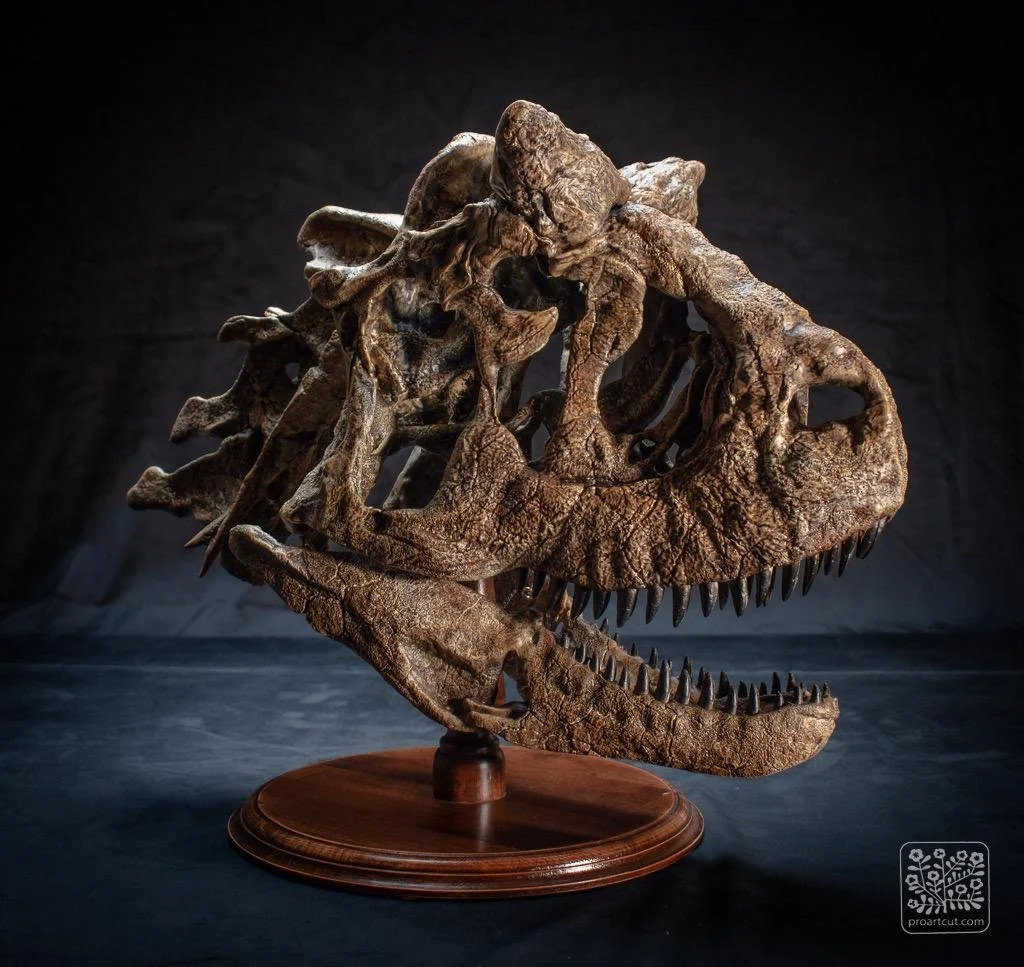 Image 1 of 10
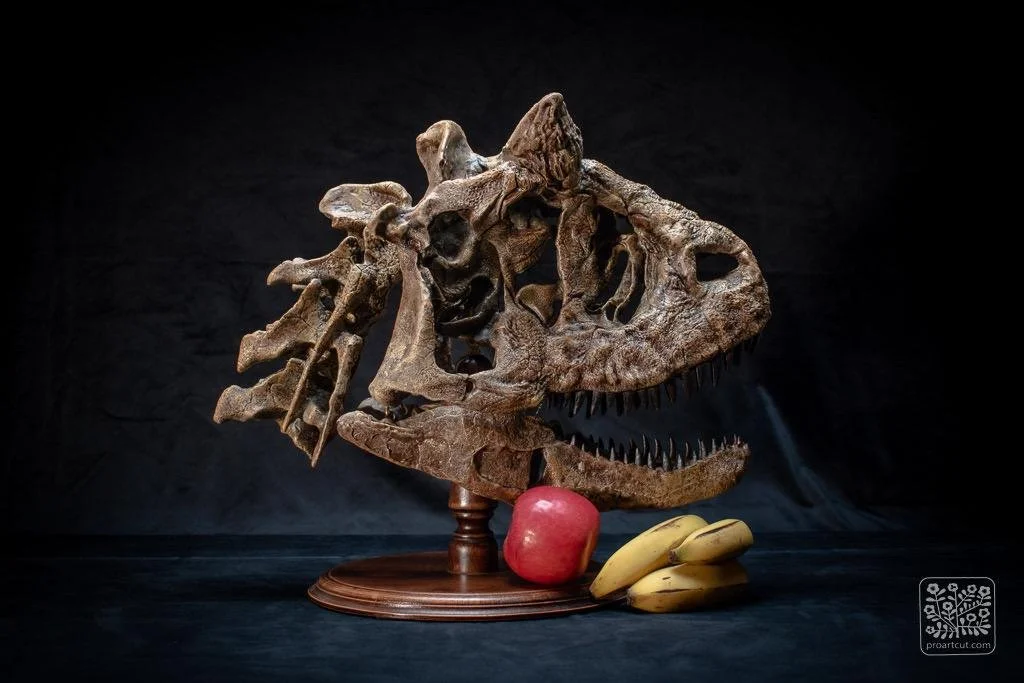 Image 2 of 10
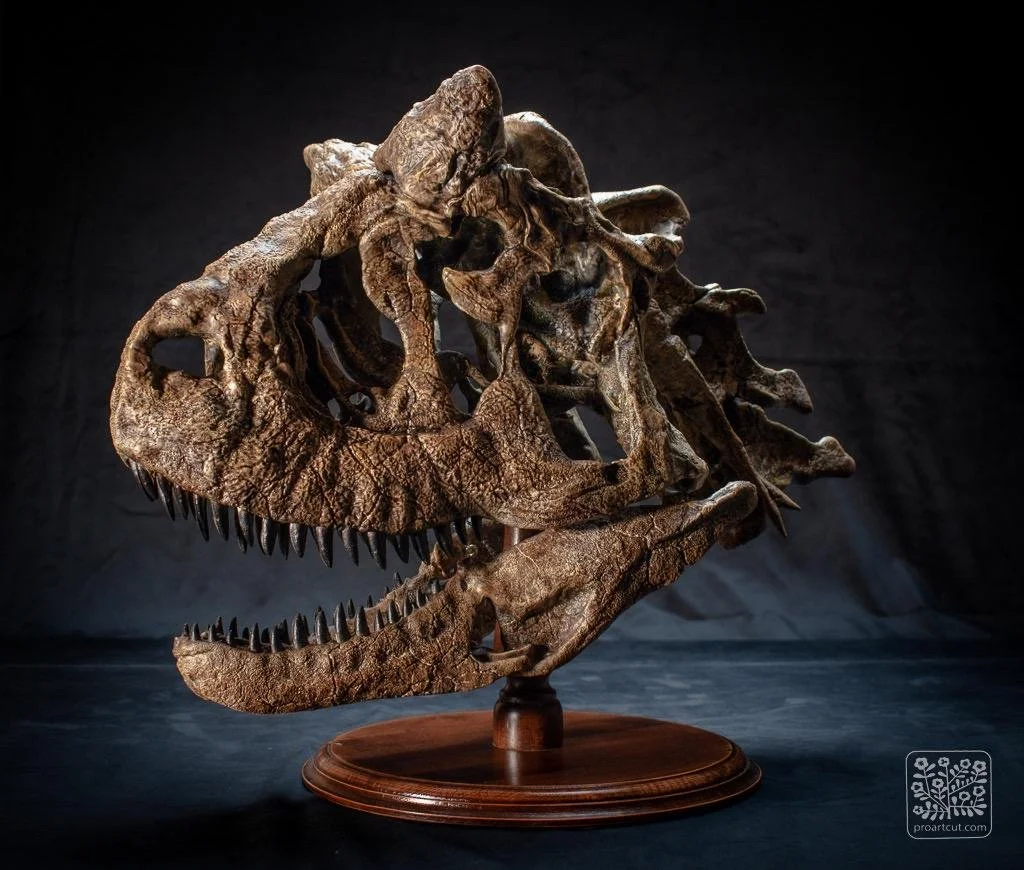 Image 3 of 10
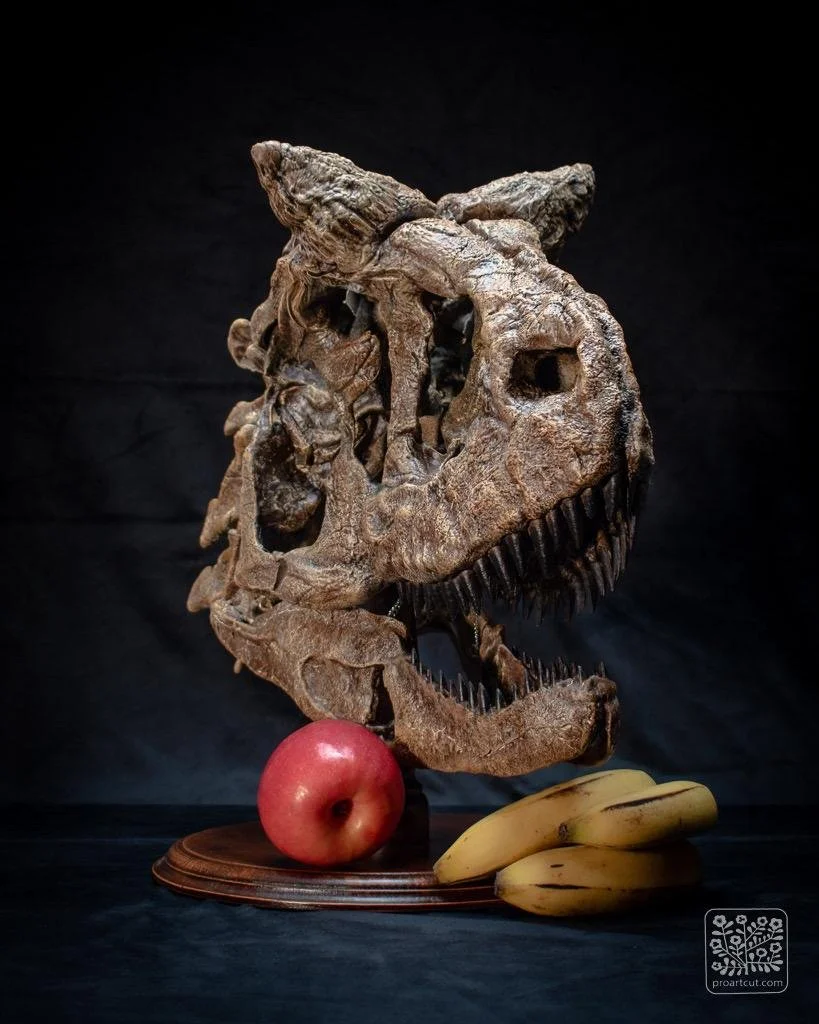 Image 4 of 10
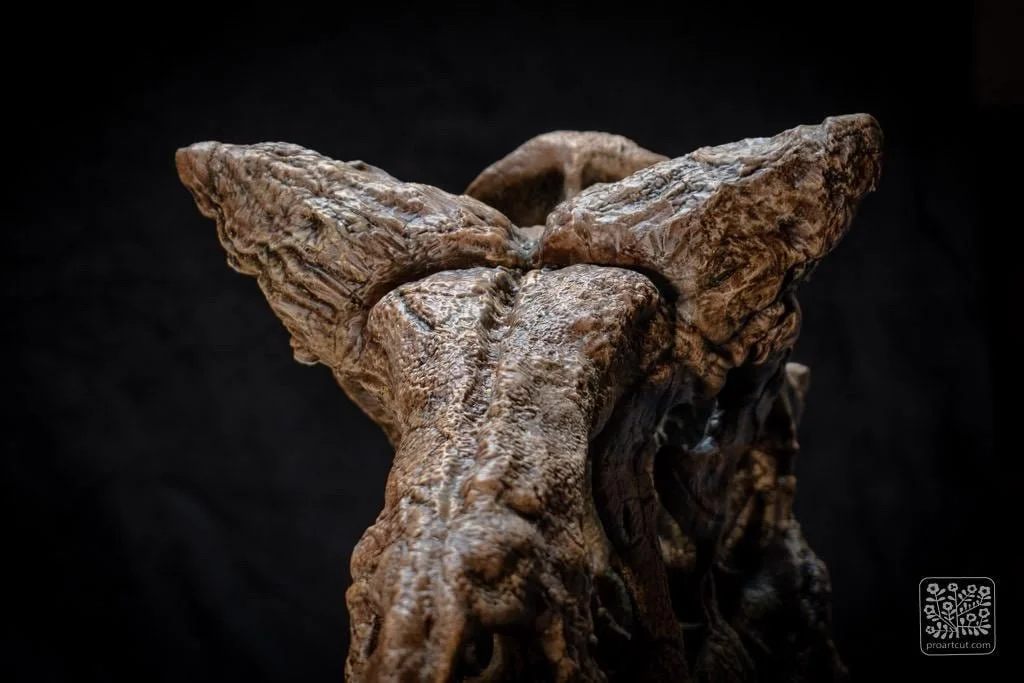 Image 5 of 10
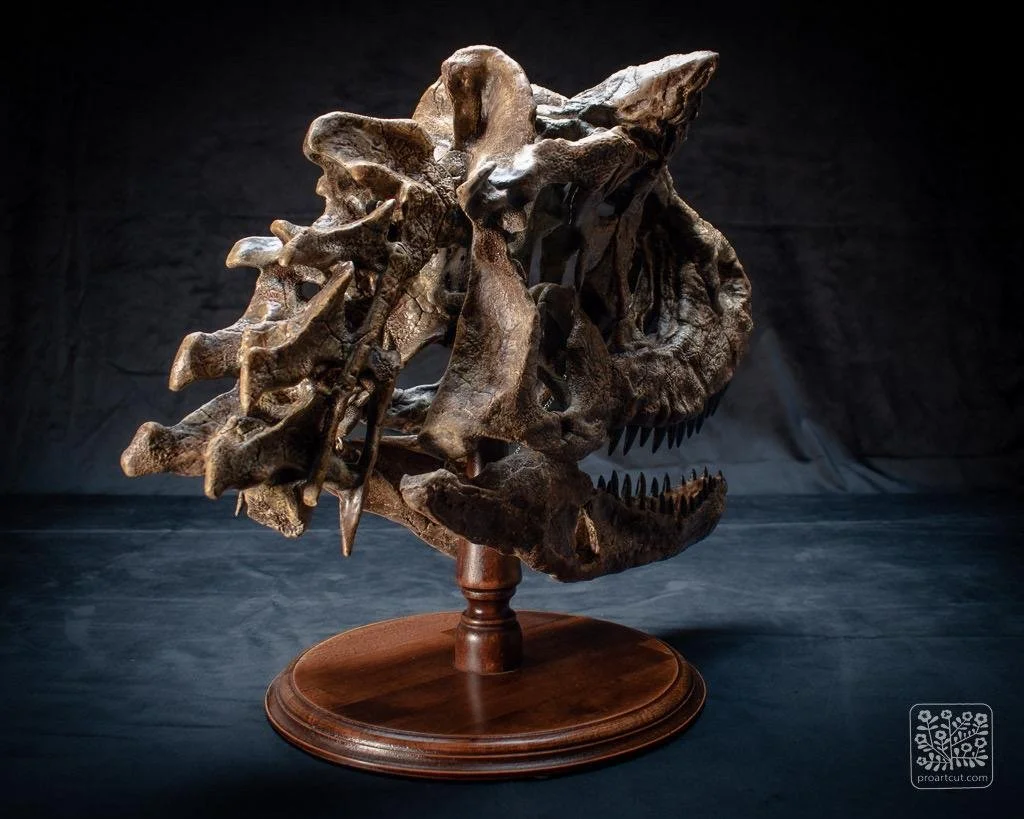 Image 6 of 10
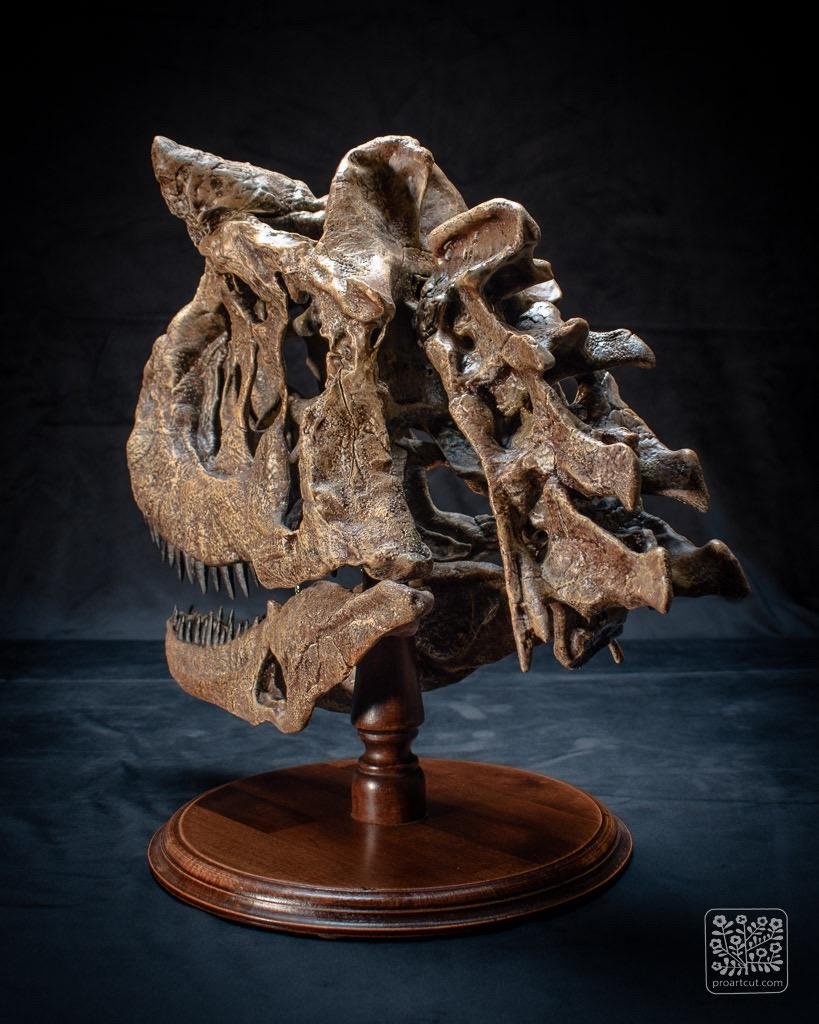 Image 7 of 10
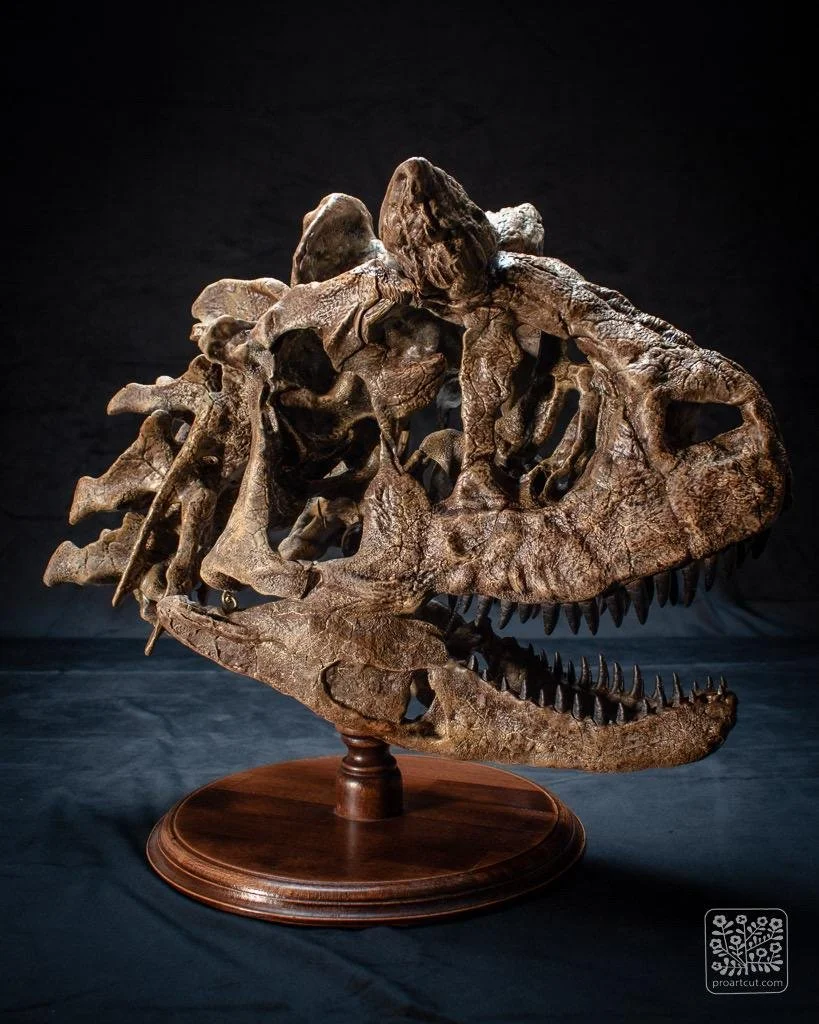 Image 8 of 10
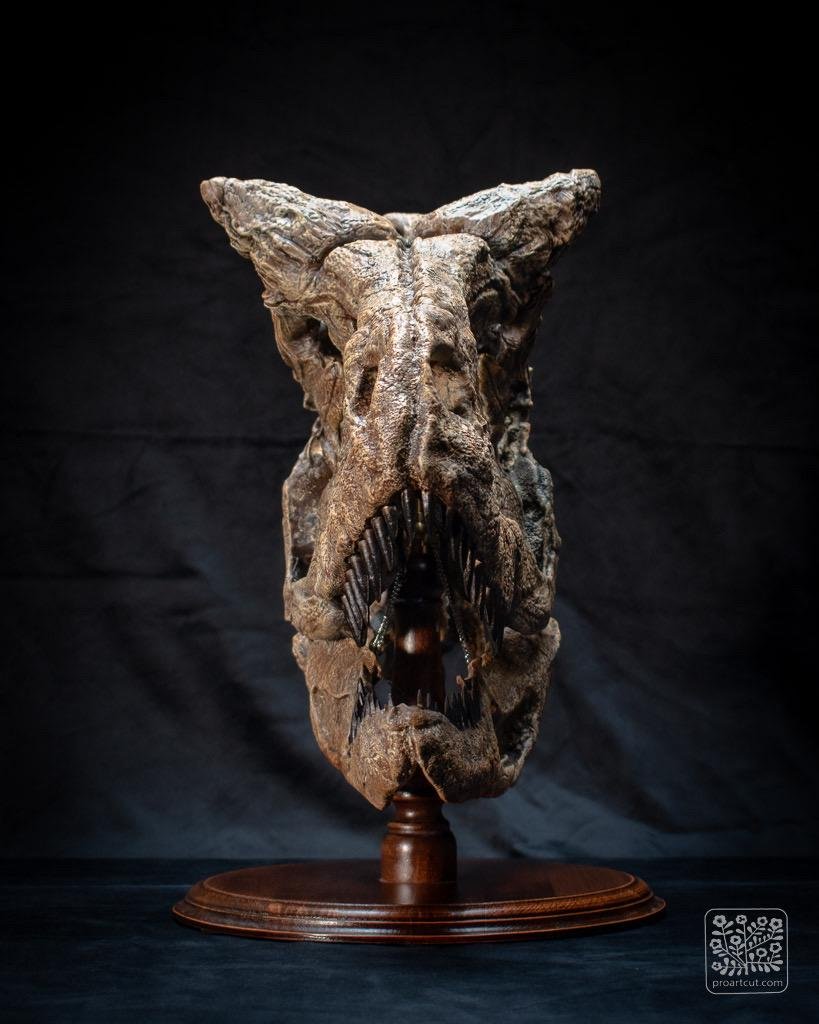 Image 9 of 10
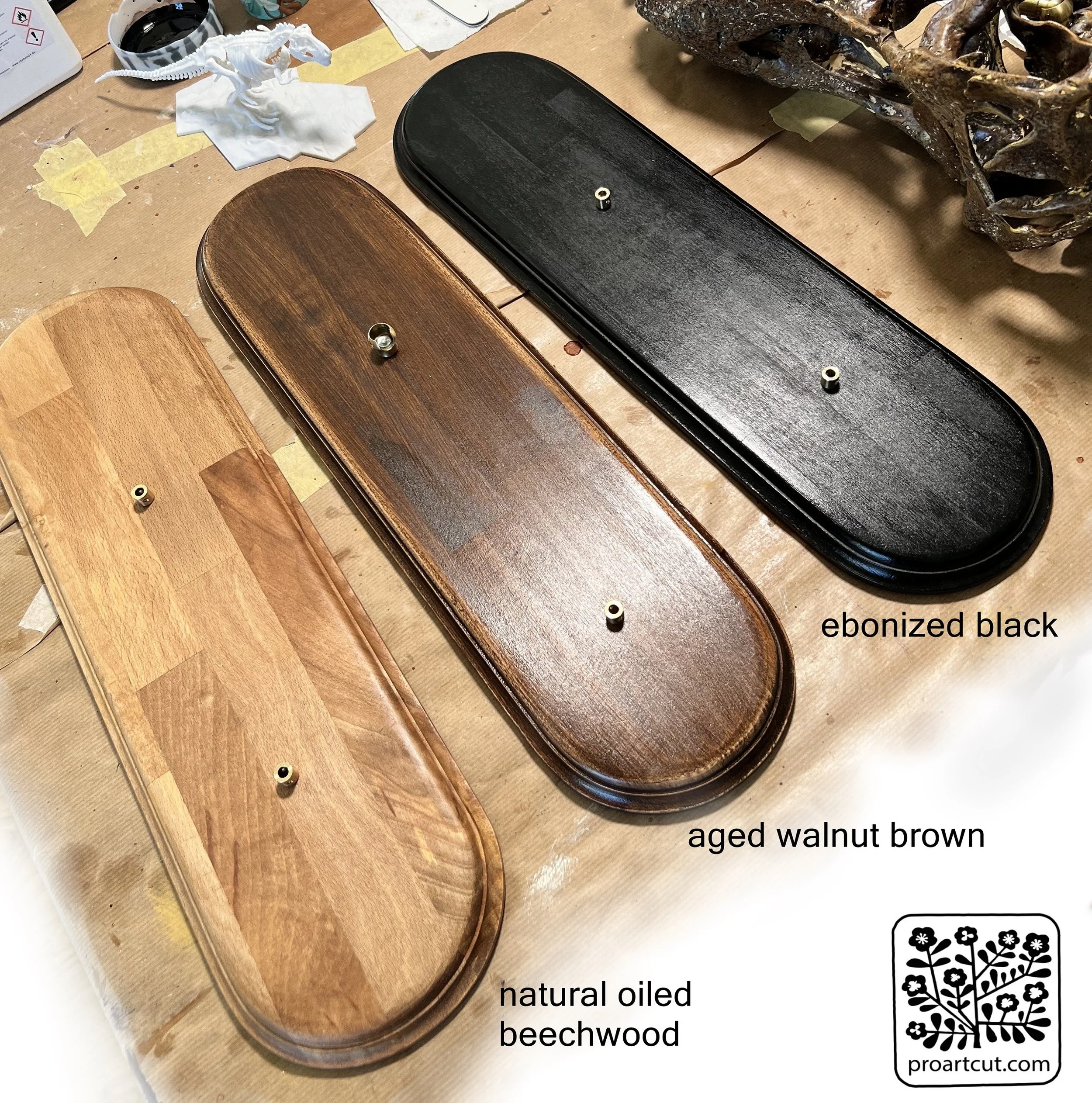 Image 10 of 10